


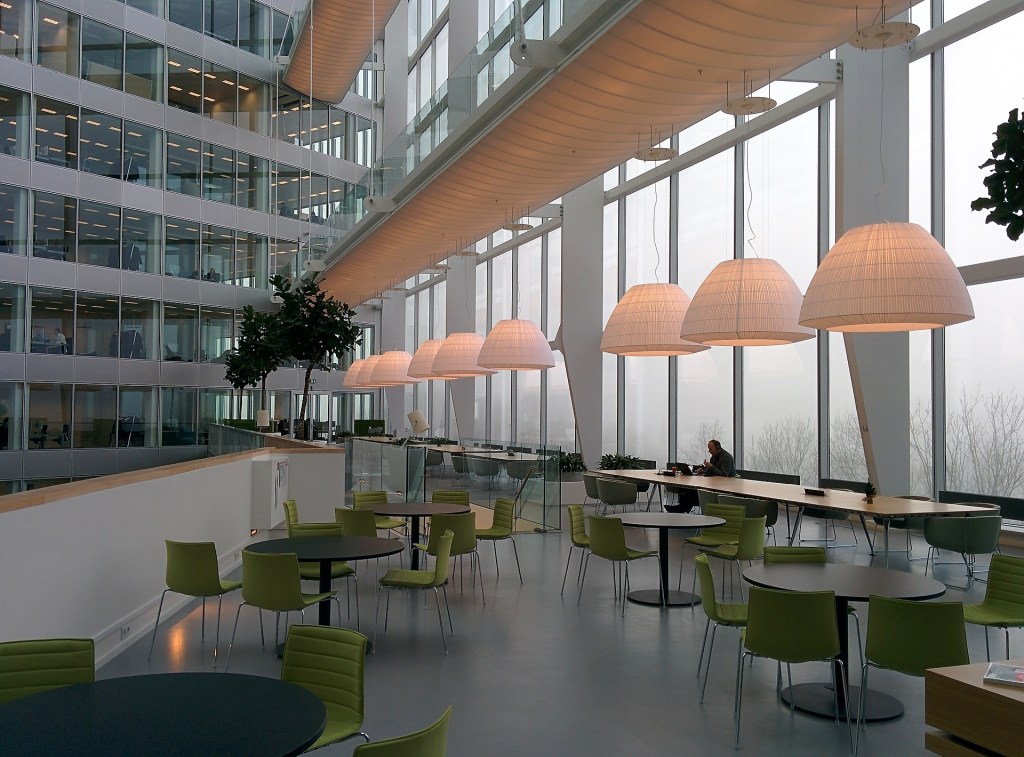
Recent studies have highlighted how the built environment can have a positive or a negative effect on an individual’s health, wellbeing and productivity in the workplace. As a result, lighting, biophilia, and colour are increasingly taking centre stage in modern workplace design in order to help improve workplace satisfaction and work performance.
Building owners and workplace operators are also being urged to think carefully about non-tangible elements that can play a key role in workers’ health and productivity levels—such as air quality, thermal comfort and noise.
The Harvard Business Review recently published a study which showed how poor air quality in the workplace can affect employees’ cognitive performance and make them less productive. The study found that better air led to significantly better decision-making performance among the participants.
“The results showed the biggest improvements in areas that tested how workers used information to make strategic decisions and how they plan, stay prepared, and strategize during crises,” the study said. “These are exactly the skills needed to be productive in the knowledge economy.”
A separate study—sponsored by global real estate company JLL, Lend Lease and Skanska—found that “improvements of 8-11% are not uncommon as a result of better air quality.”
Temperature ranked as one of the top 10 workplace complaints in a recent survey by the International Facility Management Association (IFMA). And a 2017 study, commissioned by Andrews Sykes, also revealed the extent to which a poor office climate can affect individuals’ ability to work. Some 80% of the survey’s respondents said they had needed to complain about their office environment at some point.
A report by the World Green Building Council has suggested that companies could enhance productivity by giving their employees greater control over their thermal comfort in the workplace—perhaps by providing areas with different thermal gradients that allow temperatures to vary within the built environment. “Even modest degrees of personal control over thermal comfort can return single digit improvements in productivity,” said the report.
# # # #



 Workplace journal
Leave a comment