
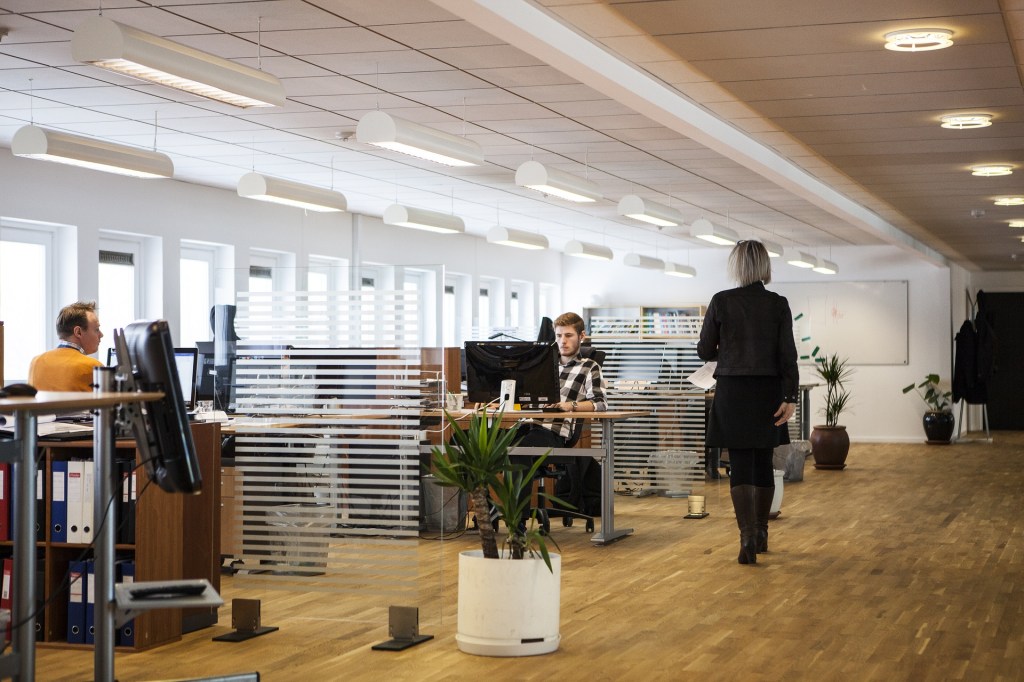
Open plan studies are placing too much emphasis on collaboration and not focusing enough on noise which is the real cause of worker inefficiency, according to new data from Unispace, a global leader in workplace design.
The new Unispace research found that many companies are introducing open plan workplace solutions because they believe they will enhance collaboration and staff productivity. However, the study discovered that many of these organisations are overestimating the amount of time staff need to spend in meetings and on collaborative activities. At the same time, they are underestimating how much time is needed for individual tasks that require concentration.
The study was based on data provided by more than 2,000 occupiers of office space across four different continents. While space requirements varied by function, and from region to region, Unispace found that the level of distraction caused by noise was a common theme.
“Our data shows that, on average, two hours per employee per day of face-to-face collaboration is a reasonable amount to be effective,” said Sam Sahni, Regional Principal Strategy for EMEA at Unispace. “However, organisations that plan for more than the two-hour average are unknowingly facilitating an overly-collaborative and noisy environment that is potentially disruptive for individuals and the business.”
He added: “Firms where this is happening need to re-assess employee feedback on their ability to focus, the cause of distractions, and other factors that will diminish future productivity.”
According to Unispace, most companies stated that they set out to change their workplace to achieve better collaboration, improve employee attraction and retention, and make cost savings. Few respondents to the survey cited the need for focus and concentration as a key reason to change their workplace environment. This approach was broadly consistent across the US, EMEA and Asia-Pacific, the study found.
Unispace believes organisations may have underestimated the value of focus-based work and its physiological impact on satisfaction and productivity. According to Unispace data, workers in professional services firms spend most of their time in a typical working day on activities that require focus and concentration (66%), with those in the US spending an even higher amount of time concentrating (75%). Those in banking and finance spend 60% of their time concentrating, while technology sector workers spend the least amount of time focusing (55%).
When ranking the top five inefficiencies in the workplace, all three professional disciplines rated noise as one of the top two problems, with a lack of quiet areas also cited. The professional services and technology professions also rated privacy as the third key concern in the workplace.
“I think we profoundly underestimate the issue of sound in the workplace and the disruptive impact it has on the ability to be productive during the working day,” said Unispace’s Sam Sahni. “So much of the dissatisfaction around the modern office is centred on the negative impact of the open plan office.”
He added: “I think that some of the biggest gains in the ability of workers to effectively perform their roles is creating a balanced and considered environment that allows them to get the job in hand done.”
# # # #



 Workplace journal
Leave a comment