
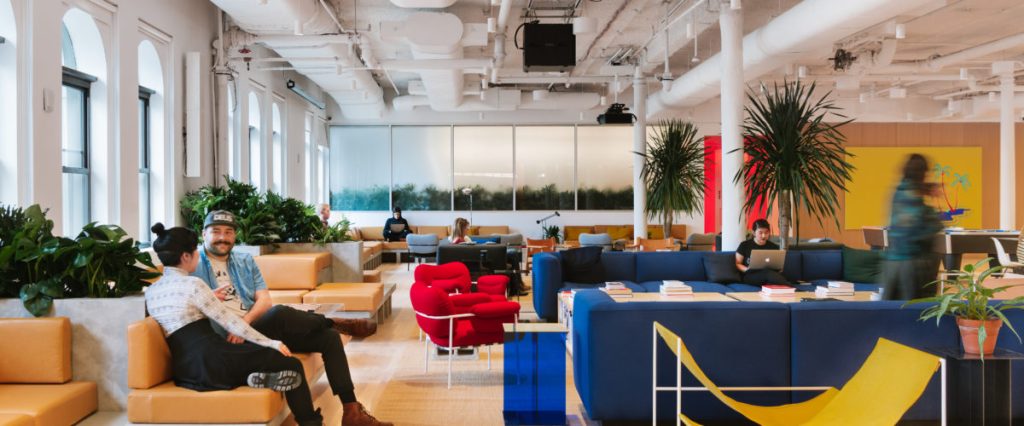
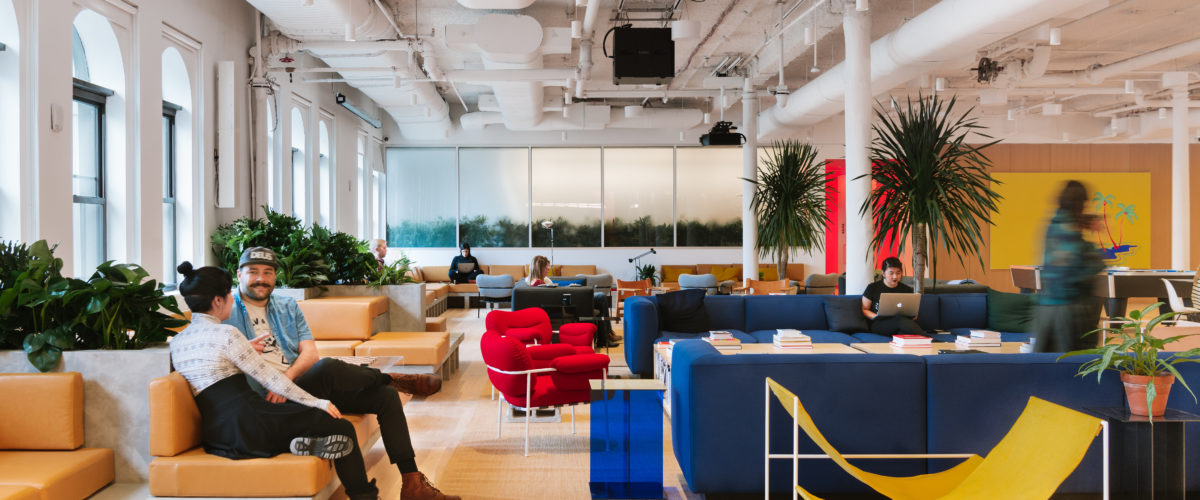
A new study has revealed that, compared with a decade ago, more than twice as many employees now use a variety of different types of workspace during the day, depending on the task they’re working on.
This “internal mobility” has more than doubled (from 9% in 2009 to 21% today), partly as a result of advances in technology such as Wi-Fi and cloud-based storage.
In contrast, it looks like the number people working remotely at home, or in other locations outside the office, has barely changed. Some 48% of employees are still permanently assigned to one desk (only 5% lower than ten years ago).
These are just some of the findings of a new global workplace study conducted by Advanced Workplace Associates, Global Workplace Analytics and Haworth Inc.
The report is based on data from over 130 organisations that employ more than 2.3 million people around the world. The results were compared to data collected across four similar biennial surveys that have been conducted since 2008.
The new data also points to a substantial shift in the motivation behind workplace transformation compared with a decade ago. Even the way success is measured has changed.
People impacts – rather than cost savings – are now the primary measure of success in workplace strategies, the study found. Ten years ago, saving money was the prime measurement of success.
Although cost savings are still a key aim, there’s now a much greater emphasis on how workplace transformation projects impact on people.
Organizations seem to be focusing more on how they can use workplace changes to increase productivity and collaboration, attract and retain staff, and improve employee satisfaction, well-being and work/life balance.
In fact, employee satisfaction with the workplace environment is now seen as the most important measurement of success, followed by employee engagement and cost reduction.
“In a downwards economy, people drivers take a back seat to hardcore business drivers – but as the economy improves and labour markets tighten, the focus returns to people,” said Chris Hood, director of consulting at Advanced Workplace Associates (AWA) and one of the founders of the new research.
Another initiator of the new study, Kate Lister, president of Global Workplace Analytics, believes organizations are now taking a “less-siloed and more holistic approach” to workplace change: “They’re realizing that workplaces and work practices that work for people are good for the bottom line.”
Workplace Journal’s Take …
The increasing use of flexible and public spaces may indicate a move towards an internalization of the co-working concept and more activity-based working.
This means space planners and managers are going to need instant access to much more accurate space utilization data if they want to constantly achieve an optimum balance between demand for flexible workspace and the availability of space.
This is likely to lead to the introduction of more advanced smart systems that will enable space planners to adopt a more integrated approach to space management and space scheduling. It reinforces the approach already being taken by firms like Smartway2.
Smartway2 has always advocated combining space allocation in time with real-time utilization to help bring choice, empowerment and convenience to individual employees through their mobile devices and on-site interactive digital signage. In this way, the technology can have a direct influence on forward planning and help drive a desirable and productive workplace.
# # # #



 Workplace journal